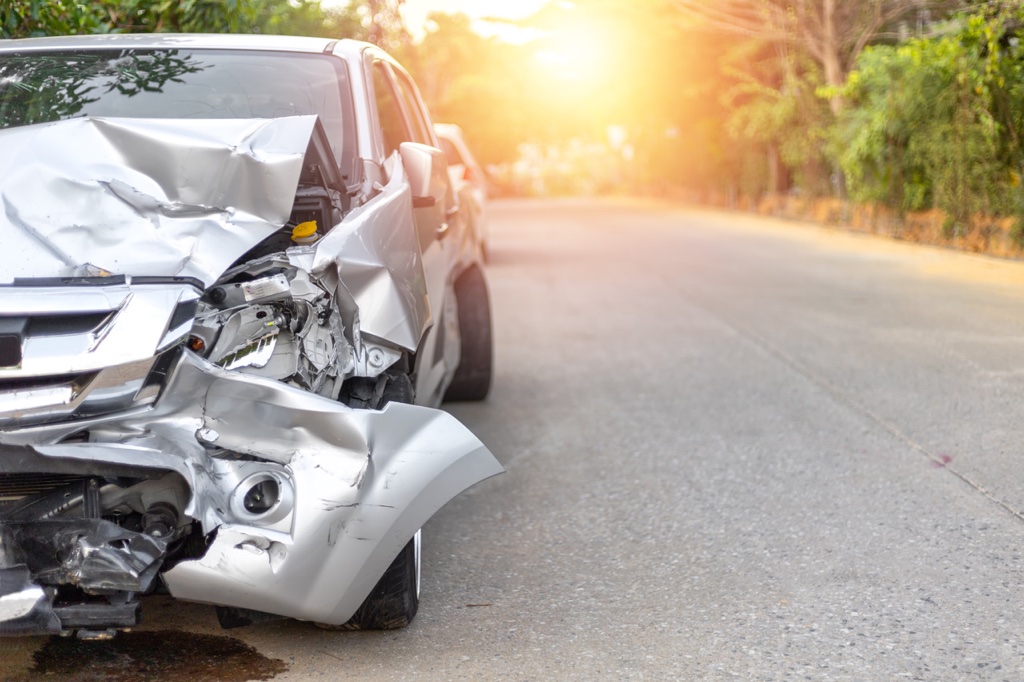
With congested roads and increasingly distracted drivers, vehicle safety is more important than ever. And while airbags and crash survival are essential to help reduce injuries in a car accident, technology has allowed us to focus on preventing car accidents altogether.
To help drivers avoid dangerous situations, vehicles now have advanced driver-assistance systems (ADAS), rear-passenger protection, pedestrian detection, automatic emergency braking, and highway driving assistance systems.
At the same time, organizations like the Insurance Institute for Highway Safety (IIHS) and National Highway Traffic Safety Administration (NHTSA) have tightened their testing standards.
The good news is that the safest cars of 2026 aren’t limited to luxury vehicles anymore. You can now find accident-prevention technology in family SUVs and affordable sedans.
What Makes a Car “Safe” in 2026?
Crash-Test Ratings
One of the key indicators of a “safe” car is a “Top Safety Pick+” or a “Top Safety Pick” from the IIHS.
A “Top Safety Pick+” requires that a vehicle have a “Good” rating in updated side crash tests, small overlap front, and updated moderate overlap front. The vehicle must also have an “Acceptable” or “Good” rating for all its headlights and pedestrian front crash prevention technology. Finally, the vehicle must have an “Acceptable” or “Good” rating in the updated vehicle-to-vehicle crash prevention test.
“A Top Safety Pick” requires all the above except the Acceptable/Good rating in the vehicle-to-vehicle crash prevention test.
To be considered a safe vehicle on the road, vehicles must also have a 5-star safety rating from the NHTSA, which rates vehicles on how they perform in frontal, side, and rollover tests. More stringent tests have also been implemented, such as the New Car Assessment Program (NCAP), which gives a pass or fail for Advanced Driver Assistance Systems (ADAS).
Side-impact testing is another required benchmark. The IIHS updated this test, which now uses a heavier barrier (3,300 lb) traveling at a higher speed (37 mph). This has pushed automakers to strengthen their side structures and B-pillars.
Driver-Assistance Technology
Driver-Assistance Technology prevents car accidents before they occur by implementing a variety of AI monitoring. Automatic emergency braking, for instance, brings the vehicle to an immediate halt if it detects another vehicle or pedestrian.
Lane-keeping assistance lets you know if you accidentally drift from your lane, preventing you from accidentally hitting or merging into other vehicles. Blind-spot monitoring alerts you if there’s a vehicle in your blind spot, on either the left or right side of your vehicle.
Adaptive cruise control is essential for long drives on freeways. The technology maintains safe following distances, while “Intersection Assist” detects oncoming traffic when you’re making a left turn and automatically stops your vehicle if you’re about to turn into the path of an oncoming vehicle.
Why Larger Vehicles Often Perform Better
While it’s true that smaller, more affordable cars can still get high safety ratings, larger vehicles typically perform better. In a multi-car collision, the heavier vehicle will often push the smaller one backward, forcing the passengers in the smaller vehicle to absorb the kinetic energy from both vehicles. As a result, larger vehicles have a weight and size advantage.
Larger vehicles also have larger crumple zones. In other words, there is more distance between the car’s engine and the passengers, reducing the amount of G-force transferred to the passengers.
Although smaller vehicles lack the size and mass of larger vehicles, they can still achieve top ratings due to their modern structural engineering and their use of AI technology, such as blind-spot monitoring, automatic braking, and pedestrian detection.
The Safest Sedans of 2026
Here is a breakdown of the 2026 safest sedans on the road.
Toyota Camry
IIHS Top Safety Pick+: The 2025-2026 Toyota Camry earned a “Good” rating across all major evaluations. It also received an “Acceptable” rating for its headlights, passenger restraints, rear passenger restraints, and rear passenger injury measures.
Additional Safety Features: The Toyota Safety Sense 3.0 Suite comes with standard blind spot detection, standard lane departure warning & prevention, and optional rear automatic braking.
Nissan Sentra
Top Safety Pick+: The 2026 Nissan Sentra earned a “Good” rating, performing well in all major safety categories. It also received an “Acceptable” rating for its front crash prevention system.
Additional Safety Features: The vehicle includes 10 standard airbags, automatic emergency braking with pedestrian detection, and lane departure prevention.
Mazda 3
Top Safety Pick+: The Mazda 3 four-door sedan earned a “Good” rating across all major safety evaluations as well as an “Acceptable” rating for its headlights, front crash prevention system, rear passenger restraints, structure and safety cage, and its driver injury measures.
Additional Safety Features: The vehicle’s i-Activsense technology includes blind spot detection, standard lane departure warning & prevention, and smart brake support.
Hyundai Sonata
Top Safety Pick+: The midsize Hyundai Sonata 4-door sedan earned a “Good” rating across all major safety tests. It also received an “Acceptable” rating for front crash prevention, seat belts ease of use, rear passenger injury measures, rear passenger restraints, and driver injury measures.
Additional Safety Features: The vehicle includes standard blind spot detection, standard lane departure warning & prevention, and standard rear automatic braking.
Kia K4
Top Safety Pick+: The Kia K4 4-door sedan earned a “Good” rating across all major safety evaluations. Additionally, it received an “Acceptable” rating for front crash prevention, headlights, seat belt reminders and ease of use, rear passenger injury measures, driver injury measures, and the vehicle’s structure and safety cage.
Additional Safety Features: The vehicle also comes with an optional blind spot detection, 360-degree surround view monitor, standard lane departure warning & prevention, and optional rear automatic braking.
The Safest SUVs of 2026
SUVs continue to dominate safety rankings because of their architecture, such as higher ride height, better visibility for drivers, and more room for advanced safety engineering. Their larger crumple zones also help dissipate more kinetic energy before it reaches passengers.
Here are some of the safest SUVs of 2026.
Hyundai Ioniq 9
Top Safety Pick+: The Hyundai Ioniq 9 4-door midsize SUV earned a “Good” rating across all major evaluations.
Additional Safety Features: The SUV also includes standard blind spot detection, standard lane departure warning & prevention, advanced collision avoidance systems, and standard rear automatic braking.
Kia EV9
Top Safety Pick+: The Kia EV9 midsize SUV also earned a “Good” rating on all evaluations, standing out especially for its strong side-impact protection.
Additional Safety Features: The SUV includes standard blind spot detection, standard lane departure warning & prevention, standard rear automatic braking, and pedestrian detection systems.
Mazda CX-90
Top Safety Pick+: The Mazda CX-90 midsize SUV earned a “Good” rating on most major tests. It also received an “Acceptable” rating for its headlights and front crash prevention system. The SUV combines strong handling, a robust crash structure, and premium safety engineering.
Additional Safety Features: The SUV includes automatic emergency braking, blind spot monitoring, blind spot assist, emergency lane keeping, and pedal misuse alert.
Subaru Outback
Top Safety Pick+: The Subaru Outback earned a “Good” rating across most major safety tests. It also received an “Acceptable” rating for the rear passenger restraints and the rear passenger injury tests. The Outback has a longstanding safety reputation, and its real-world survival data is strong.
Additional Safety Features: The SUV includes EyeSight driver-assist technology, emergency stop assist with safe lane detection, hands-free highway assist, and Intelligent Lane support.
Honda Passport
Top Safety Pick+: This rugged midsize SUV consistently turns in strong crash scores, earning a “Good” rating across all evaluation tests.
Additional Safety Features: The Honda Sensing technology suite includes Collision Mitigation Braking System™, adaptive cruise control with low-speed follow, lane keeping assist system, blind spot information, and auto high-beam headlights.
Buick Enclave
Top Safety Pick+: One of General Motors’ few major safety standouts, the 2026 Buick Enclave earns mostly “Good” ratings across all evaluations. It earns an “Acceptable” rating for front crash prevention, structure and safety cage, rear passenger injury measures, and driver injury measures.
Additional Safety Features: The Buick Driver Confidence safety system includes 15 standard driver-assistance technologies, such as automatic emergency braking, HD surround vision, rear cross traffic braking, and more.
The Safest Electric Vehicles of 2026
Despite being relative newcomers to the market, electric vehicles (EVs) are quickly becoming safety leaders. One key advantage is their battery placement on the vehicle’s floorboard, which reduces the risk of the vehicle rolling over. They also come with advanced software and more active safety systems than standard vehicles.
Here are the safest electric vehicles of 2026.
Hyundai Ioniq 5
Top Safety Pick+: The fully electric Hyundai Ioniq 5 has mostly “Good” ratings on all major safety tests. It received an “Acceptable” for its front crash prevention, seat belts ease of use, structure and safety cage, driver injury measures, and rear passenger injury measures.
Additional Safety Features: Frequently praised for its safety-tech balance, the EV comes with the Hyundai SmartSense suite, which includes forward collision-avoidance assist, blind spot assist, lane keeping assist, safe exit warning, and more.
Genesis GV60
Top Safety Pick+: This luxury EV earned “Good” ratings on all major safety evaluations as well as an “Acceptable” rating on headlights, front crash prevention, seat belt ease of use, and driver injury measures.
Additional Safety Features: Every model comes equipped with the Genesis active safety suite, which includes the forward collision-avoidance assist, blind-spot system, safe exit assist, surround view monitor, and eight airbags.
Ford Mustang Mach-E
Top Safety Pick+: The Ford Mustang Mach-E EV earned “Good” ratings on every major test. The only areas where it fell short and received an “Acceptable” rating instead were for seat belt ease of use, driver injury measures, and the structure and safety cage assessment.
Additional Safety Features: The EV comes equipped with the Ford Co-Pilot360 suite, which includes pre-collision assist with automatic emergency braking, evasive steering assist, occupant protection, and reverse brake assist.
Tesla Cybertruck
Top Safety Pick+: The Tesla Cybertruck was the only pickup to earn the Top Safety Pick+ in 2026. It had strong crash-avoidance scores, earning a “Good” rating across most evaluations. It also earned an “Acceptable” seat belt ease of use, rear passenger injury measures, and driver injury measures. Its sole “Marginal” rating, though, was for the vehicle’s seat belt reminder system.
The Importance of Rear-Seat Safety in 2026
The IIHS changed its standards after a recent study revealed that passengers in the back seat had a 46% higher risk of fatal injury than those in the front. Only 2 out of 15 small SUVs (the Ford Escape and Volvo XC40) protected the rear passengers well enough to earn a “Good” rating.
As a result, the IIHS updated its crash tests to prioritize teen passengers, children, and older adults in the back seats.
Automakers responded immediately by reinforcing rear structures, improving rear airbags, installing better seatbelt tensioners, and installing advanced occupant sensors. Thanks to these improvements, passengers are “50% less likely to be killed in a frontal crash today than they were 25 years ago.” Still, many vehicles lost awards due to the stricter 2026 criteria.
A Safe Car Doesn’t Mean an Expensive Car
Automotive safety is no longer exclusive to luxury models or pricey electric vehicles. Affordable vehicles can outperform expensive vehicles in safety tests and add-on safety features. In fact, Advanced Driver-Assistance Systems (ADAS) are now standard in many vehicles.
Some examples of affordable vehicles that earned top safety awards in 2026 include:
Crash-Test Scores vs. Real-World Safety
Crash-test scores provide excellent and helpful benchmarks in determining the safety of a vehicle. However, real-world safety statistics tend to diverge a little from crash-test scores. Controlled testing environments can’t entirely replicate outdoor weather conditions. Furthermore, in the real world, drivers must contend with weather variables, road conditions, and unpredictable driver behavior.
That’s why real-world statistics are so crucial. IIHS regularly tracks real-world studies based on police-reported car accidents and information from insurance claims. IIHS also studies the long-term safety of drivers as their vehicles degrade over time. These combined sets of data (controlled crash tests and real-world data) help IIHS create a more complete picture of vehicle safety.
Final Thoughts
The safest cars of 2026 show a distinct pattern: a shift from reactive crash survival systems to proactive car accident prevention technology. While SUVs continue to dominate the safety rankings, EVs are increasingly leading safety innovations. And affordable sedans are becoming safer than ever.
If you’re a consumer, this is encouraging news. Whether you’re shopping for a luxury vehicle, an EV, or a budget-friendly sedan, you can still make vehicle safety a priority.