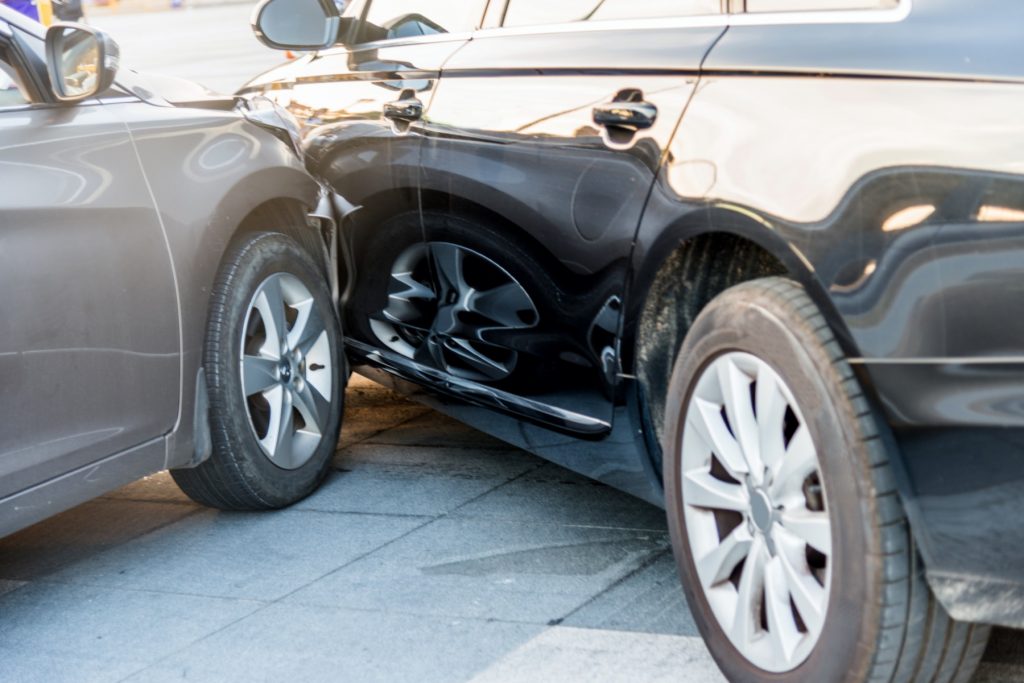
A car accident itself is over in a flash, but the process of settling a claim or pursuing a lawsuit can take months or even years. One of the biggest factors that frequently decides how long a case will go on is whether the insurance adjuster believes your version of how the accident unfolded. That is a major reason that a car accident attorney will often work with experts in car accident reconstruction.
Let’s take a closer look at what accident reconstruction is. We will also explore how it could benefit your case.
What Is Car Accident Reconstruction?
Lawyers sometimes work with engineers, physicists, and even former police officers to study the moments leading up to a crash. These experts work from evidence from the scene, especially photographs and videos. They will also look at the damage to the involved cars and other evidence like the tire tracks left behind from braking. Even the dispersal of the debris from the crash can be very informative.
Likewise, experts will go through the reports of police and first responders. They will read witness statements and may even interview witnesses. In some cases, the weather report from the day of the accident becomes important, too.
Modern cars frequently have black box data. For example, some insurers now attach monitoring devices to cars in exchange for a rate discount. Also, GPS data from navigation systems and phones can be quite revealing. A reconstruction can also show whether the black box data from your vehicle was faulty.
The Reconstruction
Ultimately, the goal is to figure out how the vehicles physically behaved at the time of the accident. What were their speeds? At what angle did they hit each other? Did a driver even attempt to brake? When did each driver begin braking? Did weather play a factor, such as the sun being on the horizon or rain making braking harder?
Knowing this information can tell an expert what an at-fault driver was doing at the time. Suppose the phone data shows that the at-fault driver was texting. Perhaps there’s no evidence of tire marks from braking. That reconstruction strongly points to a distracted driver.
In many cases, reconstructionists also build 3-D models and animations. These can be very useful for showing the insurance adjuster that the defendant was negligent or even reckless. For example, the reconstruction might show the at-fault driver was going well above the speed limit at the instant of the collision.
A reconstruction can also explain to a judge and jury how a defendant broke the law. For example, a reconstruction can show which traffic signals and speed limit signs were visible as the at-fault motorists approached the scene. Picture a scenario where the defendant could easily see a red light, ignored it, and ended up T-boning your vehicle. That is a hard case to defend, and many insurers will want to settle early.
These kinds of reconstructions also tell the defense that you mean business. Juries respond to detailed reconstructions, especially when an expert witness is explaining one. This can convince the insurance company that it’s better to settle your case now rather than risk a jury awarding a large judgment.
Proving Liability
The major goal of any vehicle accident claim is proving that the other driver was more likely than not liable for what happened. In Texas, the legal standard is 51% liability. This means that more than half of what happened was the defendant’s fault. For the defendant to be liable at all in Texas, they must have contributed the majority of the negligence in the accident. otherwise, the claimant gets no compensation.
Notably, it’s beneficial to prove more than 51% liability. The settlement or judgment will adjust to the defendant’s percentage of liability. If the defendant was 75% liable in a $1 million judgment, for example, then the award would be $750,000. Especially in catastrophic accident cases, every percent of liability you can prove can be thousands of dollars.
A lot comes down to the defendant’s duty of care. This is the responsibility that every driver has to operate their vehicle safely on the road. Suppose a defendant claims they didn’t have a clear view at the moment they pulled into an intersection. A reconstruction can show the view from the at-fault driver’s car, revealing what they could see. In some cases, an obstructed view may even be proof they should have taken greater care rather than recklessly pulling out.
Linking Injuries to the Crash
The reconstruction is also valuable in linking injuries to the crash. Suppose a victim suffered whiplash during an accident. A reconstruction showing a rear-end collision that spun the victim’s car around is consistent with whiplash injuries. This more directly ties the defendant’s liability to your injuries.
This becomes very important if there are questions about prior injuries. Defendants will often claim that a victim had suffered injuries in a prior accident, through athletic activities, or at work. If the reconstruction shows that the injuries could have only occurred in this scenario, that strengthens the case for compensation.
There is also the broader question of how medical reports and accident data line up. Even if the case seems to be headed for a quick settlement, it helps to show that a set of injuries corresponds with a series of accident events. A claim involving a broken arm from a side-impact collision, for example, may carry more weight if the reconstruction shows the corner of the defendant’s vehicle pushing the door into you.
Especially in Texas, settlements and judgments tend to depend on how much you can connect your injuries to the defendant’s negligence. An accident reconstruction draws a straighter line to specific injuries. If you suffered organ damage, a traumatic brain injury, or spinal damage, it’s important to reconstruct the physics of the accident. This will present your argument for why you’re entitled to compensation.
Catastrophic Injuries
Many insurance policies have capped compensation limits. The law typically removes this cap if the injuries are catastrophic. This means the injuries were life-altering, such as injuries that prevent a person from ever working again. An accident reconstruction can improve the argument for a catastrophic insurance claim, potentially uncapping the settlement or judgment.
Finding Hidden Evidence
Some accidents end up revealing more than expected. For example, many fleet operators in trucking accident cases try to pin the blame on an independent operator or even whoever loaded the trailer. However, the reconstruction might show that the truck’s braking system didn’t engage as quickly as it should have. This can be proof that the fleet operator failed to properly maintain the rig.
There are also scenarios where a reconstruction might point to the state, the county, or a local government. The physics could demonstrate that an unrepaired pothole was the main cause of an accident. Especially in a one-vehicle accident, this may be the only way for you to find a defendant to file a claim against.
The reconstruction sometimes shows where evidence might be available. 3-D modeling, for example, can reveal a line of sight from something like an ATM or security camera. This can add to the evidence pool while also improving the quality of the reconstruction itself.
Sometimes the reconstruction contradicts witness claims. If a confident witness contradicts your arguments, a reconstruction may show that their version of events isn’t quite right. The person likely didn’t mean any harm, since memory can be a sketchy thing. However, the reconstruction can show where a witness just isn’t getting the details right.
Reducing Partial Fault
Many accident cases involve partial liability. If a victim was traveling five miles per hour over the speed limit, they might be assigned a small amount of partial liability. The defendant is only liable for their portion of their negligence, not the victim’s portion. Anything you can do to reduce your portion of liability is a good thing for your case.
For example, you want to show that you took proper steps to prevent the accident as much as you could. The reconstruction may show that you were braking in time while the other driver failed to react promptly enough. This moves more of the liability onto them.
Contesting the Defense’s Version
Accident reconstruction is very much a game that two can play at. If the defense thinks it has a compelling argument that you were predominantly at fault, they may bring in their own experts to do a reconstruction. Your ability to counter their claims could be the difference between getting a considerable settlement or nothing at all.
Comparing different reconstructions often shows faulty assumptions. The defense may also lack specific data. Likewise, you have the right to challenge how their experts even came to their conclusion. In fact, you have the right to question whether the defense’s experts are even legally recognized experts. A judge dismissing a defense expert is often convincing enough to make an insurance company settle rather than keep fighting.
Settling Factual Disputes
Sometimes there are legitimate factual disputes during an accident case. The defense might assert that there wasn’t sufficient braking time because of weather. Your attorney might use a reconstruction to show that a properly maintained vehicle would have had enough braking time. The reconstruction could demonstrate that the defendant’s vehicle had bald tires or poorly maintained brakes. Perhaps the defendant’s view was obstructed because they never fixed a cracked windshield.
Studying Notorious Highways and Interactions
Every urban commuter knows that some intersections are downright notorious, and Huntsville has more than its fair share. The I-45, for example, is known for producing fatal rear-end accidents. Especially following a multi-vehicle accident, a reconstruction can be useful for showing how the chain of collisions led to your vehicle’s damage and your injuries.
A reconstruction of events at a notorious intersection, for example, can be quite convincing to jurors who’ve been scared while driving in that same area. This is a notable advantage of the American legal system using a jury of your peers.
How We Work with Reconstruction Experts
Our law firm evaluates each case for whether a reconstruction would be beneficial. There are cases that don’t need a reconstruction. For example, there could be clear video evidence of a defendant blowing through a red light while speeding. It probably doesn’t take an expert reconstruction to convince an insurer to settle a T-bone case involving a defendant who blew a red light at 85 mph in a 35-mph zone.
Conversely, a reconstruction could add that extra bit of confidence a case needs to make sure it gets above the 51% liability threshold. Also, a reconstruction can be invaluable if the defense starts bringing in experts and its own reconstruction of the crash. Reconstructions are also useful when there are mitigating factors, such as possible blind spots, weather, and other traffic.
Huntsville Car Accident Attorneys
You can bring your case for an evaluation. Our car accident attorneys will use their experience in accident claims and their knowledge of the Huntsville region’s conditions to assess the likely strength of your claim. We will explain what you need to do to protect your rights as you move forward, too. Likewise, we will also tell you whether we believe your case might benefit from bringing in experts to perform an accident reconstruction.
If you suspect that you were the victim in a car accident in the Huntsville area, contact Haney Paschal & Romoser, P.C. now to talk with a lawyer and learn how to defend your rights.